By Alina Kamalova, Darika Risbaeva, Denize Usupova and Karim Hammou
Groove Republic is a solid team composed of Alina Kamalova, founder, Denize Usupova, executive director, and Darika Risbaeva, community director. These three women from Kyrgyzstan started dancing as kids, dug deeper into the hip-hop culture through music in the 2000s, and drew inspiration from visual culture and fashion alike. Darika even attended a course on “hip-hop culture and its influence” at her music school. Together, they decided to create a dance event organization two years ago. Since then, they have built a landmark in the local hip-hop dance scene, and beyond. In this text, based on an interview with Alina, Darika and Denize conducted by Karim Hammou in 2026, they present their vision of the hip-hop culture and their plan to strengthen it from Central Asia. Groove Republic will take part in the Hip-Hop Knowledge symposium, which will be held on October 29th and 30th at the American University of Central Asia in Bishkek. It will also organize a King of the Cypher contest at the end of the workshop.
Alina, Darika, Denize: It’s Groove Republic!
Alina: Whether it’s through dance, music, graffiti, fashion, or another element of the culture, it gives you space to find your own voice and be yourself without being controlled by the fear of judgment. The second thing is respect. For me, it’s very important to understand the culture you are participating in, where it comes from, and to respect its history, its community, and the people who built it. Hip-hop gives you freedom, but at the same time it teaches responsibility, discipline, and how to exist together as part of a community.
Darika: When I was getting into hip-hop, the community was much smaller and there were far fewer opportunities to learn, connect and perform. Now there are many more dancers, teachers, studios, events and different styles within the scene. I think hip-hop has become much more visible in Bishkek and at the same time we are still figuring out how to grow the scene while staying connected to the culture and its roots. For me understanding where something comes from is an important part of being able to represent it authentically.
Denize: I was fascinated by the music, the movement, the fashion, and the energy surrounding hip-hop. I think one of the most important things for me has been learning more about the history of hip-hop, why it emerged, and the role it played in bringing communities together and giving people a way to express themselves. Understanding its roots makes you realize that hip-hop is much more than just a dance style or a genre of music. It has a deeper meaning and a strong connection to identity, community, and self-expression. On a personal level, especially through freestyle dance, hip-hop has become a way for me to express myself in a way that words sometimes can’t. For me, there’s something very real about freestyle. You’re not just reproducing movements or trying to look a certain way; you’re expressing your own personality, emotions, musicality, and perspective through movement. Everyone brings something different to the dance floor, and there’s no single right way to express yourself.
Two years to build trust
Groove Republic started as an idea in 2024. Our founder, Alina, was living abroad at the time and attending many dance festivals and events. She was very inspired by the atmosphere, the cultural exchange, and the way these events brought people together, and she always had the idea of creating something similar in Kyrgyzstan. Before returning to Kyrgyzstan in 2025, she met Blaakow, a dancer in Paris and shared this idea with him. He became the first international artist Groove Republic later brought to Kyrgyzstan for our first small Afro intensive. He supported the idea from the beginning and helped us make that first event possible. It was a very small event, with around 50 participants, but the energy was incredible.
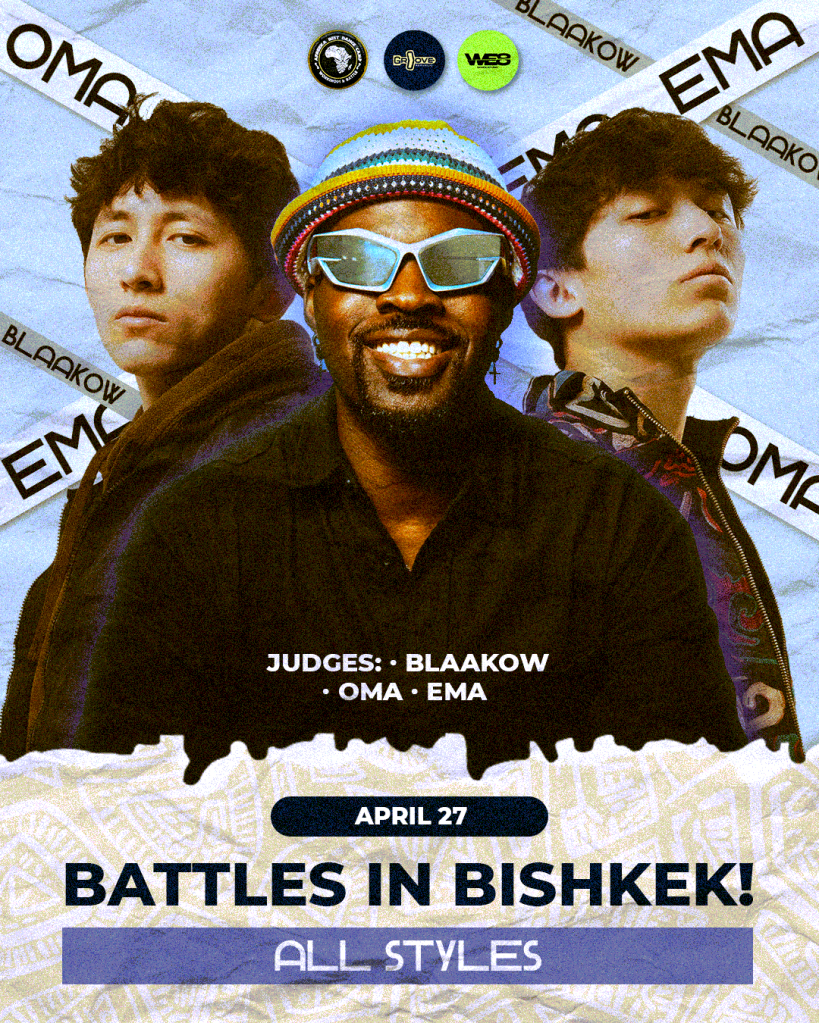
After that, we organized another Afro intensive in Kazakhstan with a teacher from South Africa, and that was the moment when we understood that we wanted to build something much bigger. This led to our first United Dance Weekend in October 2025, where we brought five international artists from France, Belgium, Brazil, the Netherlands and Spain, and gathered around 150 participants from Kyrgyzstan, Kazakhstan, Uzbekistan, Russia, Turkey and Tajikistan.
From the beginning, our main ambition has been to support and revive the dance community in Kyrgyzstan. When there are not enough events or opportunities, dancers can lose motivation, stop dancing, or leave the community. We wanted to change that and show that Bishkek can also become an important place for dance culture — a city where strong international artists come, where dancers from different countries gather, exchange, learn from each other and share their love for the culture.
So far, we have organized three major international events. The first was United Dance Weekend in October 2025, which was our first large-scale event in Kyrgyzstan. After that, in February, we organized another edition of United Dance Weekend in Bali, Indonesia. Our third major event was the International Hip-Hop Festival in Bishkek, organized as part of Francophonie Week together with the European Union and the Embassies of France and Switzerland.
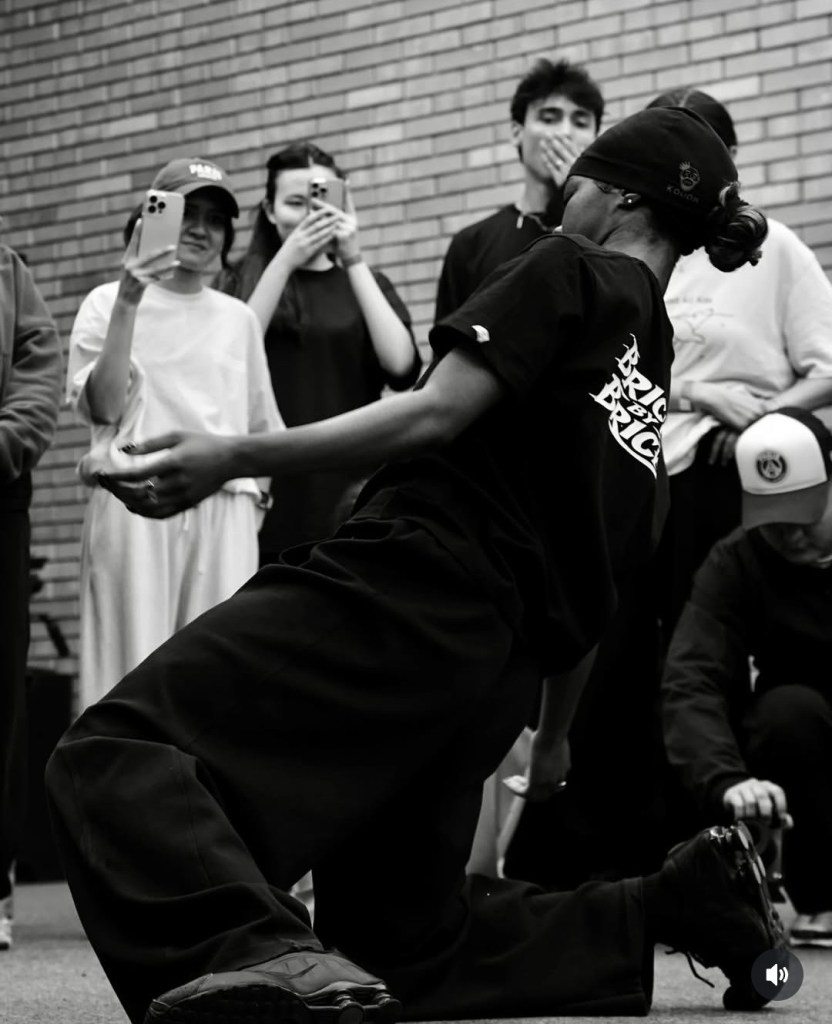
One of the things that makes Groove Republic special is that we pay a lot of attention to details. We do not want to create events that feel generic. We want each project to have its own atmosphere, identity and style. That is why inspiration plays such an important role in our work. It influences our event concepts, our visuals, our social media, our design choices and the overall feeling we want people to experience. For example, our next edition of the International Hip-Hop Festival will be inspired by the theme “Back to 2000s.” That idea came from listening to hip-hop and R&B from the 2000s, looking at the visuals of that era, and exploring the fashion and energy of that time. So inspiration for us is not abstract, it becomes something very concrete that shapes the creative direction of each event.
Right now, we are preparing for the next edition of United Dance Weekend, which will take place on November 14–15. This time, the focus will be more on choreography rather than battles. Until now, we have organized many hip-hop battles, and this is one of the reasons Groove Republic became well known within the regional hip-hop scene. But for this edition, we want to explore another side of the dance community through choreography championships, showcases and workshops. We will also bring international artists from Australia, the Netherlands and Ireland.
With every event, our international audience is growing. People from different countries are now following what is happening in Kyrgyzstan and waiting for the next edition, so our goal is to continue building Bishkek as a meeting point for dancers, artists and communities from different parts of the world.
Hip-hop burgeoning scenes
Today, hip-hop is much more present everywhere — in music, dance, fashion and youth culture in general. I think fashion has become one of the strongest influences, especially for the younger generation. Hip-hop and underground aesthetics are now a big part of how young people express themselves. When it comes to dance, I feel like we are still developing. We already have many strong dancers who travel abroad and represent Kyrgyzstan and our hip-hop community, but at the same time, I still feel like this is only the beginning. I can see how much bigger the scene can become in the future. And in music, the younger generation is very connected to new-school hip-hop, while at the same time people still know and respect old-school hip-hop. Music, dance and fashion are probably the three areas where you can see the biggest evolution.
Another interesting development is the growing recognition of hip-hop at an institutional level. Recently, the Minister of Culture spoke about plans to support the development of hip-hop in Kyrgyzstan, including music and other creative sectors. Through our work with the Ministry of Culture, we’ve also seen how important institutional support can be in creating more opportunities for the community.
There is definitely a connection between the different elements but it could be much stronger. Dance, music, graffiti and other parts of hip-hop often exist within their own communities and there is still a lot of room for them to come together more.
There’s potential to build even stronger connections by creating platforms that bring all these elements together more intentionally. This is something we also try to do through Groove Republic: to create spaces where different parts of hip-hop culture are represented, where people can exchange knowledge, collaborate, and learn from one another. I think strengthening these connections can help the culture continue to grow while preserving the sense of community that already exists in Kyrgyzstan.
Building a stronger regional dance community
Groove Republic was never meant to be only a local project. From the beginning, international exchange was one of the main ideas behind it.
Kyrgyzstan has very talented dancers and a strong community, but the scene is still relatively small. And for any culture to grow, people need to exchange, not only with Europe or the United States, but also with neighboring countries like Kazakhstan, Uzbekistan etc. Going to battles, championships, workshops, meeting new dancers and seeing different approaches gives people new experience and new motivation. If we always stay inside the same bubble, the community can eventually stop developing. For us, growth comes from being challenged, from seeing something new, and from learning from people who have different experiences.
This means having access to workshops, master classes, battles, and events that are both geographically and financially accessible to the local community. This is actually one of the reasons we started organizing events through Groove Republic. Our focus is on bringing these opportunities to Kyrgyzstan and creating spaces where local dancers, as well as dancers from across Central Asia, can learn from international artists, exchange knowledge, and grow together. We want people to have access to these experiences without always having to travel abroad to find them. Ultimately, I think it’s about building a stronger local and regional community and creating an environment where dancers have the resources and opportunities to continue developing their skills, finding their own voices, and contributing to the culture.
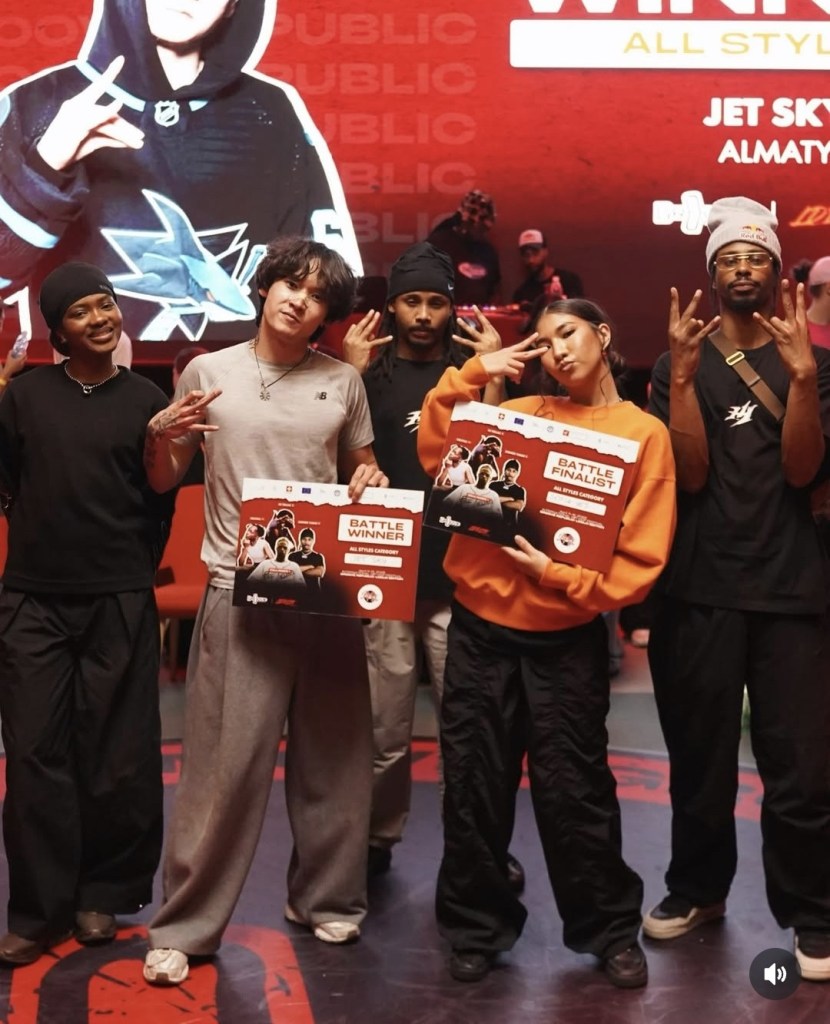
That is why bringing international artists to Kyrgyzstan is so important. They share their knowledge, their culture and their perspective with local dancers. At the same time, their presence attracts dancers from other countries to come to Kyrgyzstan as well. And this creates another very important type of exchange. Our dancers do not only learn in workshops, they also meet people from other countries, compete with them, communicate with them and become part of a wider international community.
Kyrgyzstan is a relatively small country, and a few years ago many international artists had never heard of it as a place for major dance events. In the beginning, it was often difficult even to reach well-known dancers or their managers. Sometimes we received no response, and sometimes it was clear that they were hesitant because they did not know the country, the organization, or what to expect.
But this has changed a lot. After three major editions of Groove Republic events, the artists who came to Kyrgyzstan were surprised in a very positive way by the organization, the hospitality, the community and the country itself. Many of them shared their experience on social media and spoke about us with other dancers and colleagues. Today, many more people in the international dance scene know Groove Republic, and they know that it is based in Kyrgyzstan. That is something we are very proud of.
For us, dance is not only about taking classes or winning battles. It is also about connection, communication and cultural exchange. This is one of the core ideas of Groove Republic, and it will always remain one of our main priorities.
Europe has an important place in our international network because many of the artists, teachers and professionals we collaborate with come from European countries. It also gives us access to very developed dance scenes, different approaches, and strong cultural institutions and partnerships. Bringing these artists to Kyrgyzstan helps our local community connect with a wider international scene.
At the same time, Central Asia is just as important to us, but in a different way. Kazakhstan, Uzbekistan, Tajikistan and Kyrgyzstan are geographically close, and we see a lot of potential in building a stronger regional dance community together. Dancers can travel between these countries more easily, participate in each other’s events, compete, exchange and grow together.
For us, Europe creates an important bridge to the wider international dance world, while Central Asia is the community we want to strengthen from within. Ideally, Groove Republic can connect these two spaces and make Kyrgyzstan one of the meeting points between them.
Connecting roots and new ideas
Kyrgyz culture is an important source of inspiration. It’s interesting to explore how traditional elements can be combined with contemporary music and aesthetics. For example, we produced a music video featuring French DJ TellaX and Kyrgyz artist Kudmanaly Sultan, bringing together modern electronic music and Kyrgyz folk instruments. The visual direction of the video also drew inspiration from Kyrgyz culture, including traditional clothing and other cultural elements.
This video was a very special experience for us because it was completely unexpected. None of us had directed a music video before, so it became our first experience of creating something like this from the beginning. The project was also completely non-commercial. TellaX was coming to Kyrgyzstan and wanted to discover more about the country and its culture. While exploring Kyrgyz music, he created a track inspired by traditional Kyrgyz sounds and shared it with us. When we heard it, we immediately thought it would be amazing to create a music video together with local Kyrgyz dancers.
For us, it was important for several reasons. First, TellaX is very well known in the international hip-hop battle scene, so the project gave us another opportunity to show Kyrgyz dancers and our local hip-hop community to a much wider audience. Second, we wanted the video to represent Kyrgyzstan itself — not only through dance, but also through music, traditional clothing, jewelry, food, nature, national dance and other cultural details.
There was also an unexpected challenge. The original track used a sample from another musician, and when we decided to make the project public, we needed to make sure we had permission to use it. Unfortunately, the original author did not approve the use of the sound, so just a few days before filming we had to change the music completely. That challenge actually made the project even more meaningful. We invited an amazing Kyrgyz musician and improviser, Kutmanaly, who created an original traditional sound for the track and also appeared in the video playing the instruments.
One of the main ideas of the video became the connection between tradition and the new generation. There is a symbolic moment where Kutmanaly places his hand on TellaX’s shoulder, almost like giving his blessing, and then the scene transitions to a young female dancer. For us, this represents something we strongly believe in: as a young generation, we should not forget our roots, but at the same time we should not be afraid of new sounds, new ideas and new forms of expression. The goal is to carry our culture with us while moving forward.
The reaction was also incredible — people from many different countries were sharing and discussing the video, and it gave Kyrgyzstan, our dancers and our culture a lot of international visibility.
Women shaping the culture
In April, we will organize the next edition of our International Hip-Hop Festival, which we are developing into an annual event. We decided to organize this event around International Women’s Day, on March 7, because women have always played an extremely important role in hip-hop culture, but historically many parts of the scene have been very male-dominated.
Women in hip-hop and street dance have had to fight for visibility, recognition and the same opportunities as male dancers. Of course, female dancers have proved a long time ago that talent, musicality, creativity and strength have nothing to do with gender. Today we see incredible women winning major battles, judging international competitions, teaching around the world and becoming some of the strongest figures in the culture. At the same time, inequality has not completely disappeared.
For us, the important issue is not only whether women are allowed to participate. It is also about whether they receive the same visibility and opportunities — whether they are equally represented as headliners and judges, whether they feel confident entering competitive spaces, and whether their achievements receive the same recognition.
We have also recently seen important moments in the international battle scene where women have reached and won at the very highest level. Events like Summer Dance Forever in Amsterdam are followed by dancers all over the world, so seeing women succeeding on these stages is very powerful for younger generations.
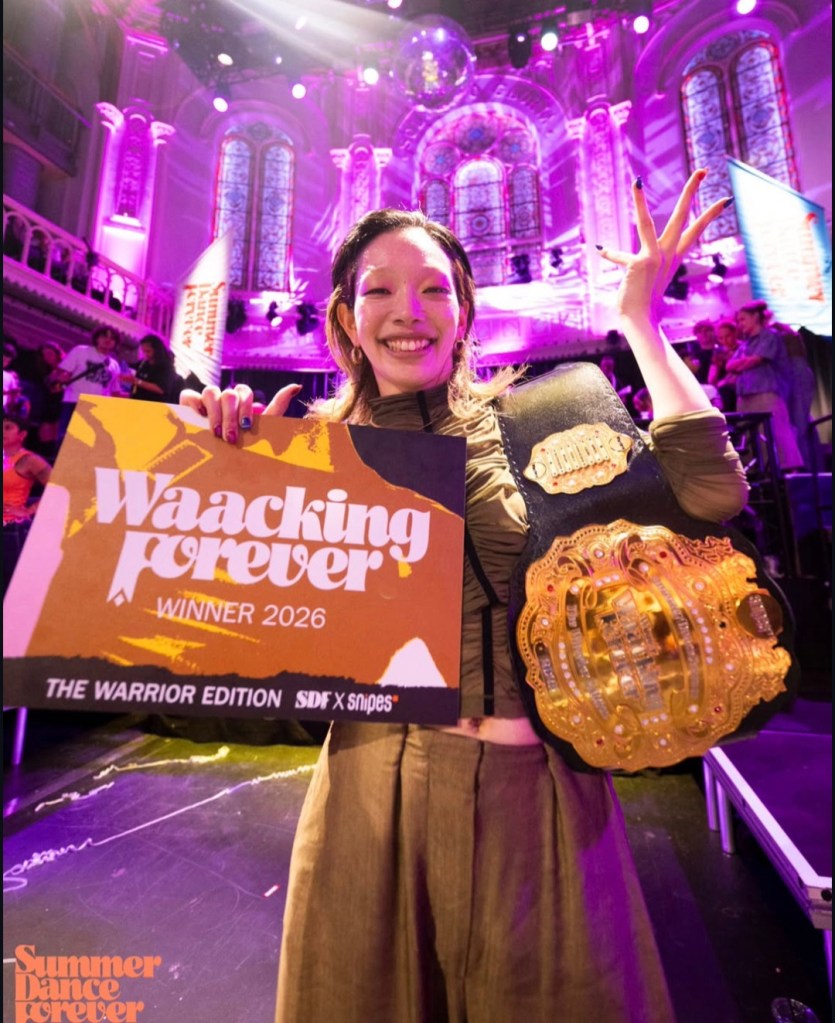
With our March event, we want to celebrate women who are already shaping the culture, but also create more opportunities for the next generation. We want young female dancers to see that there is a place for them in hip-hop — not only as participants, but as leaders, artists, judges, teachers and people who can influence where the culture goes next.
For us, gender equality does not mean separating women from the rest of the community. It means creating a scene where talent and contribution are valued equally, regardless of gender, and where everyone has the same possibility to grow and be seen.

