Installation, 2026
Altynai Kudaibergenova
“Ookat” is a kyrgyz word that stands for many words like “stuff”, “wealth”, “belongings”, “property”, “housework”, and so on.
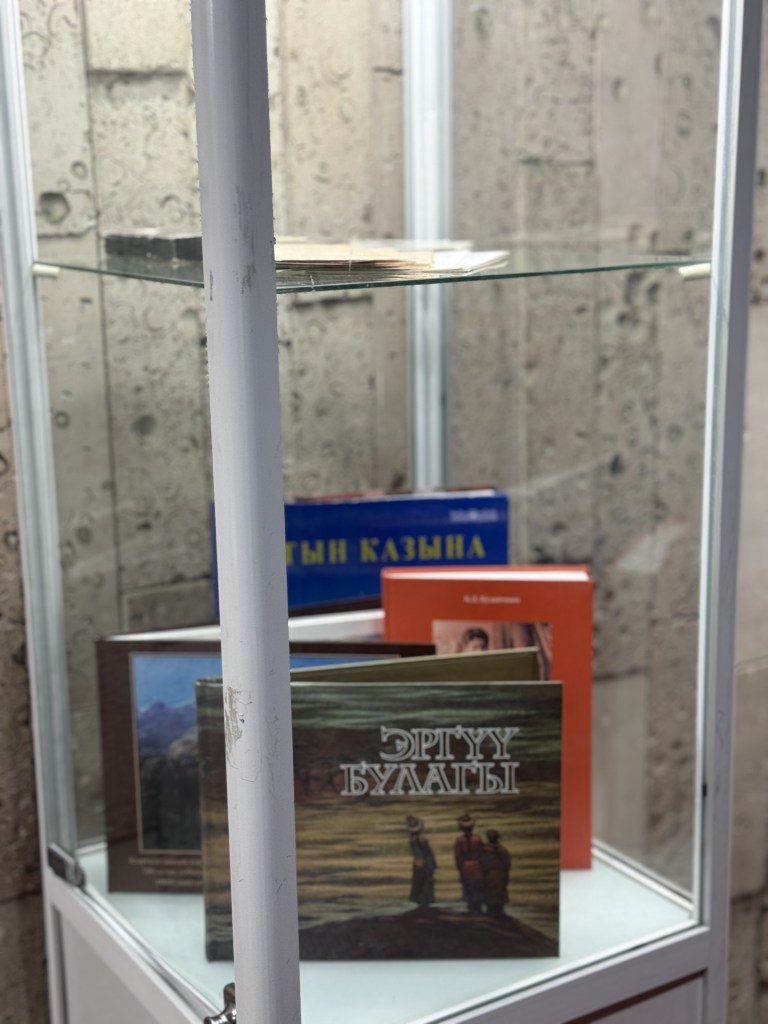
The glass display stands usually serve for exhibiting collection items — the precious heritage the museum is responsible for.
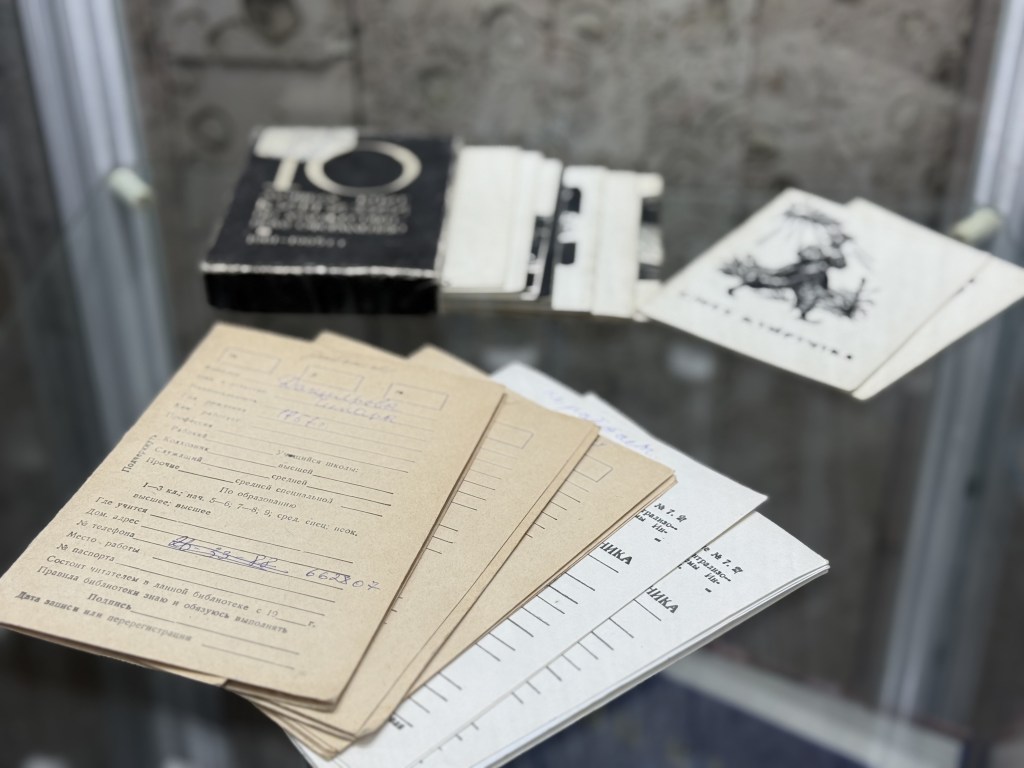
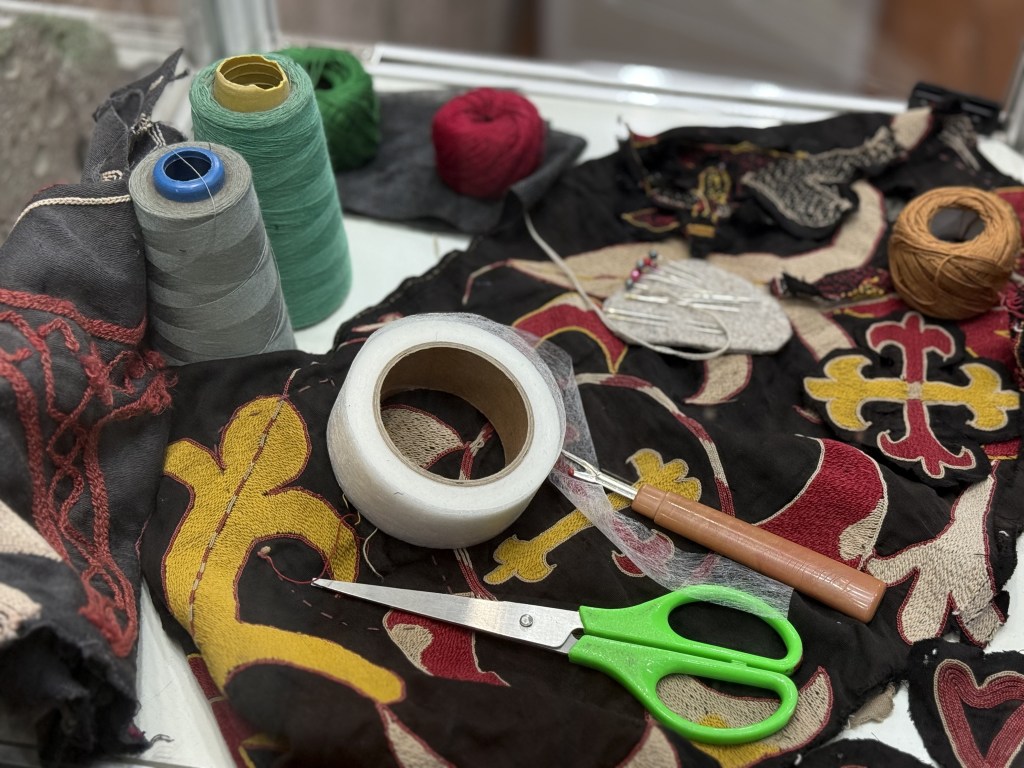
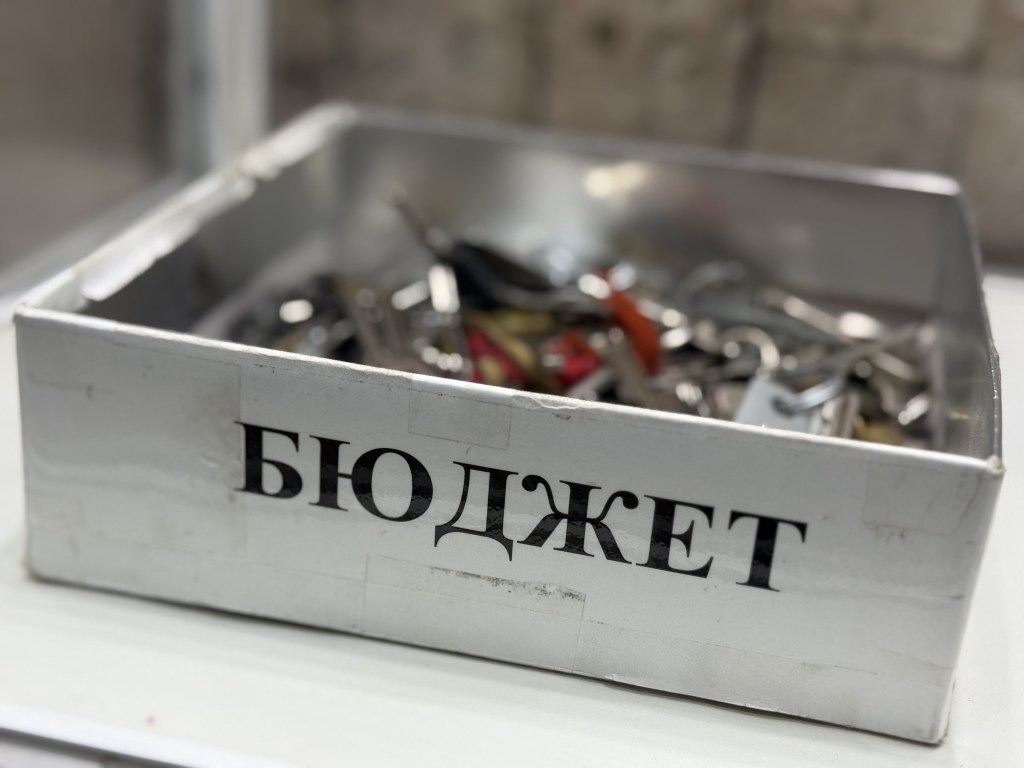
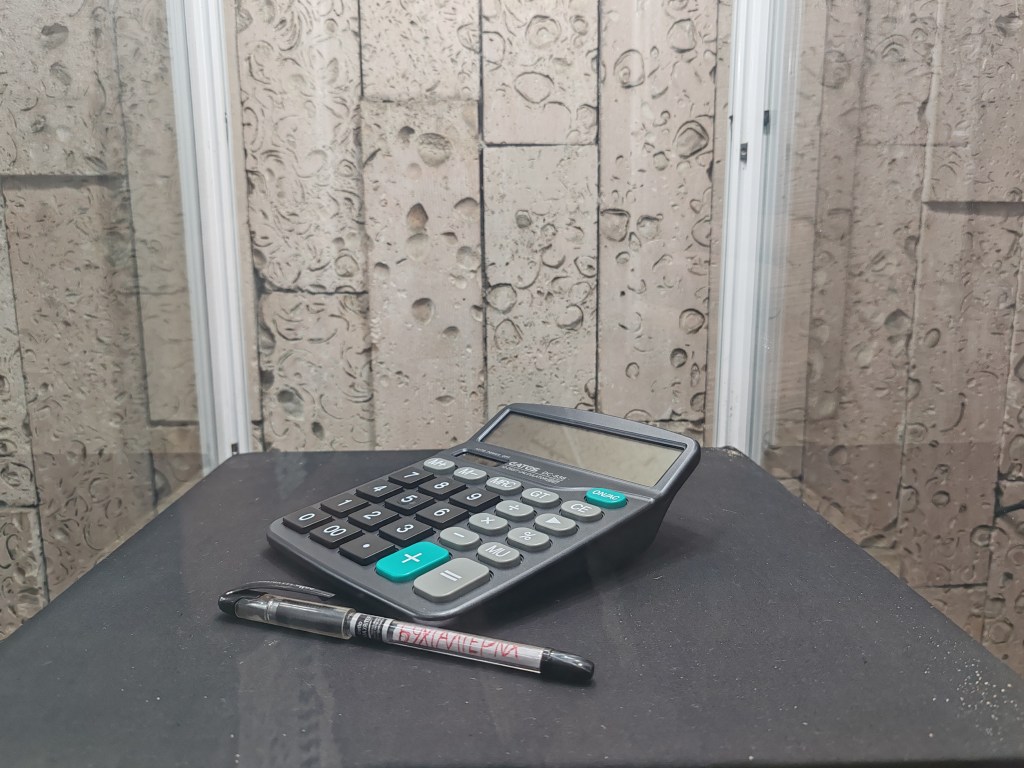
This time the stands do not feature delicate ceramics or refined jewelry. The finesse and fragility of all things precious about the museum lie in its people. Those who make possible the comfort, the exhibitions, the workshops, and perform the regular mundane tasks without which the museum would just shut down. Most of them are women.
The exhibition features items that belong to women that work at our museum. Those objects are far from being a part of the museum collection, but they assist women in everyday work life, keep them going when things get rough, or remind them of their dreams, hopes and aspirations.
There is separate items, assemblages, that stand for a separate woman or a whole department. Some departments at the museum consist solely of women.
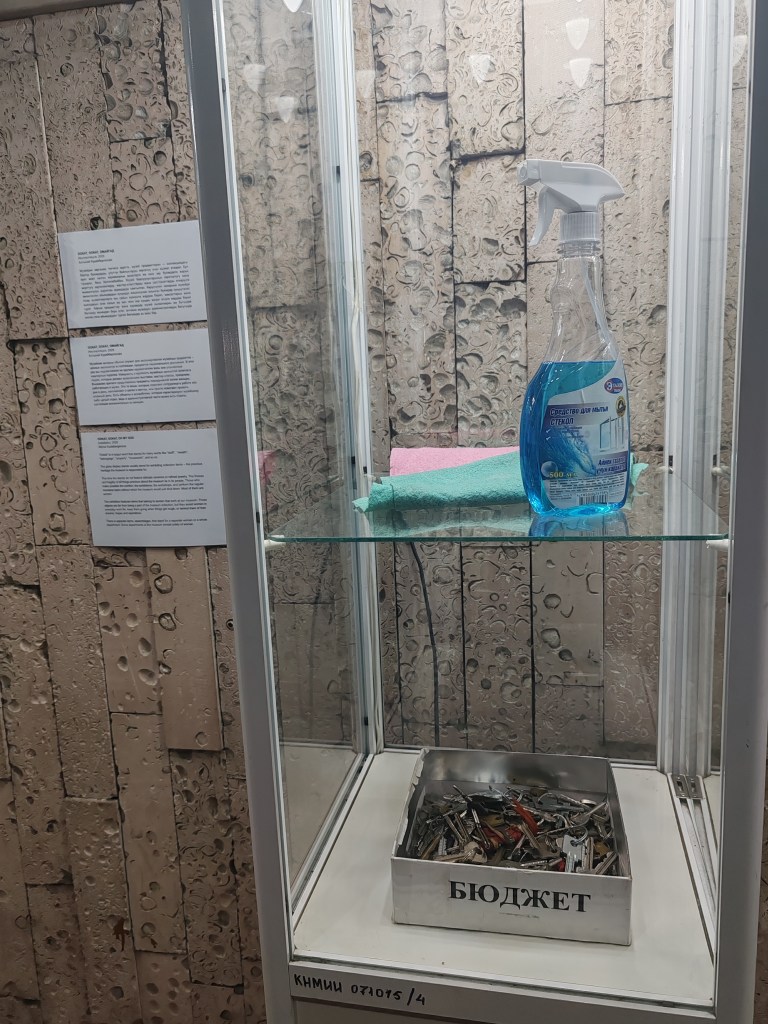
“Here, you might only see a towel, but in the past, especially during museum parties, disinfection was a big focus. Yes, disinfection—because we can’t forget the technical aspects. The cleaning staff, mostly women, are an essential part of the museum, keeping it clean. Every morning, all of them, across all the large departments, come in and clean the museum from top to bottom. They finish by 11 AM because they need to prepare the museum for the workday.
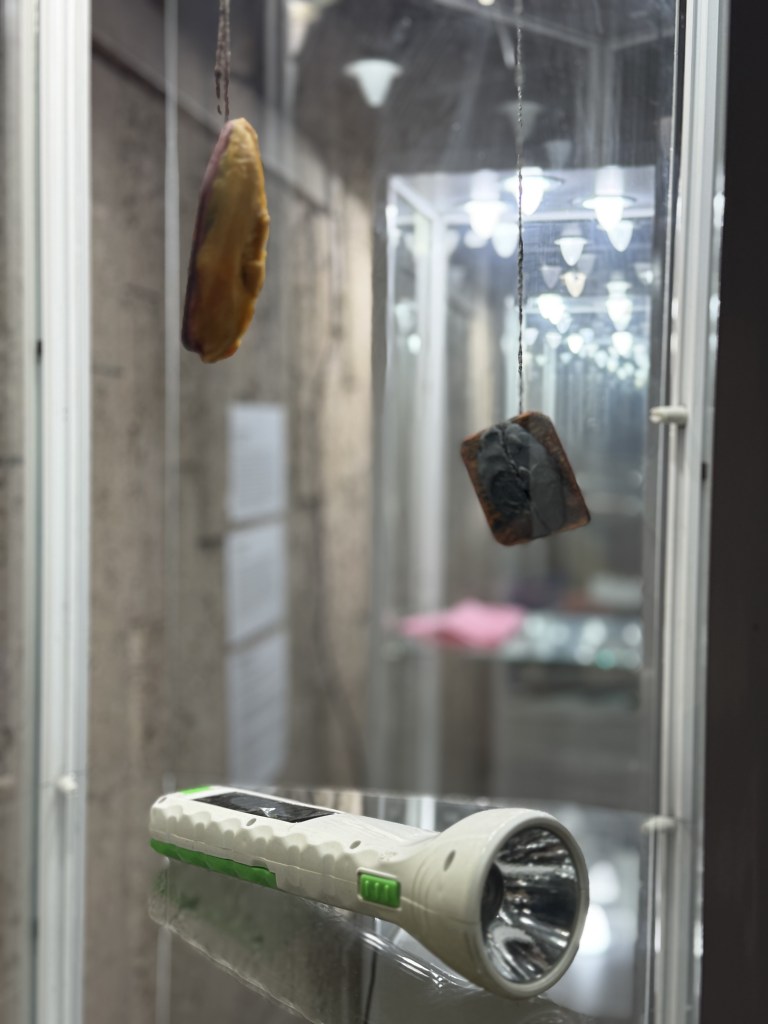
Here’s a flashlight—it’s not exactly the same as the one used, but it resembles the flashlights the security guards use. Every morning and evening, the guards take a flashlight and walk through all the halls, securing the doors with seals. What are those called again? Seals, yes. They’re made of wood, rope, and clay. The guards attach them and stamp them with a seal. So, the flashlight, the stamp, and the seal are the main symbols of opening and closing the museum every morning and evening”, Meerim Emil kyzy.

