Installation, archives, 2026
Alima Tokmergenova
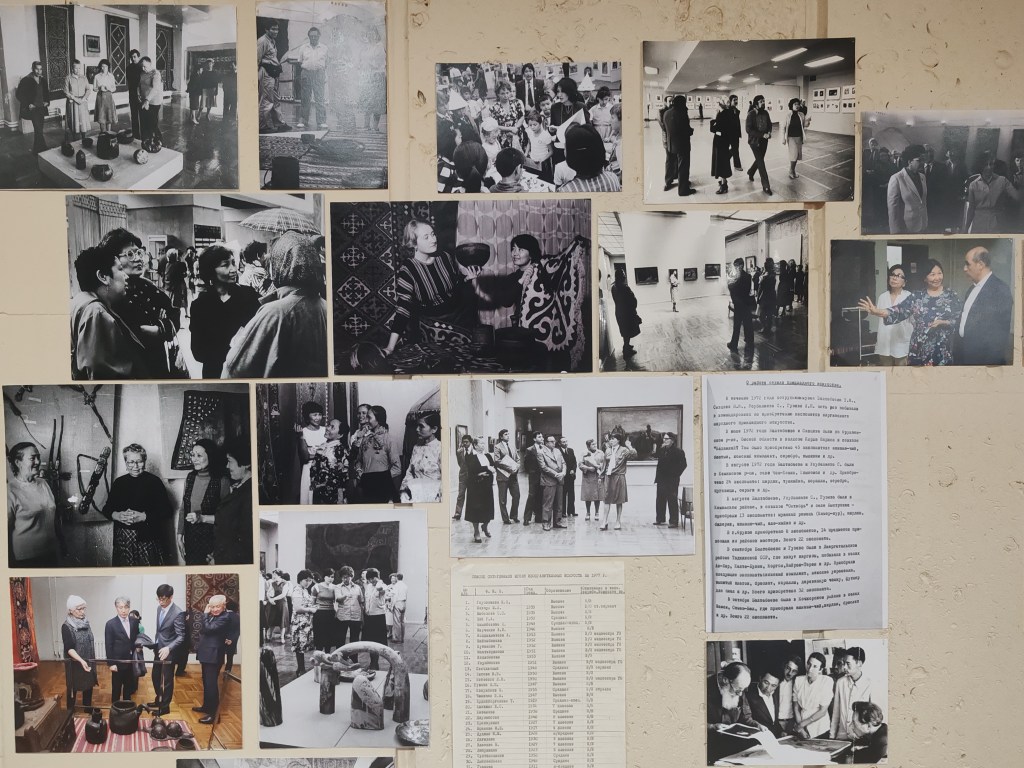
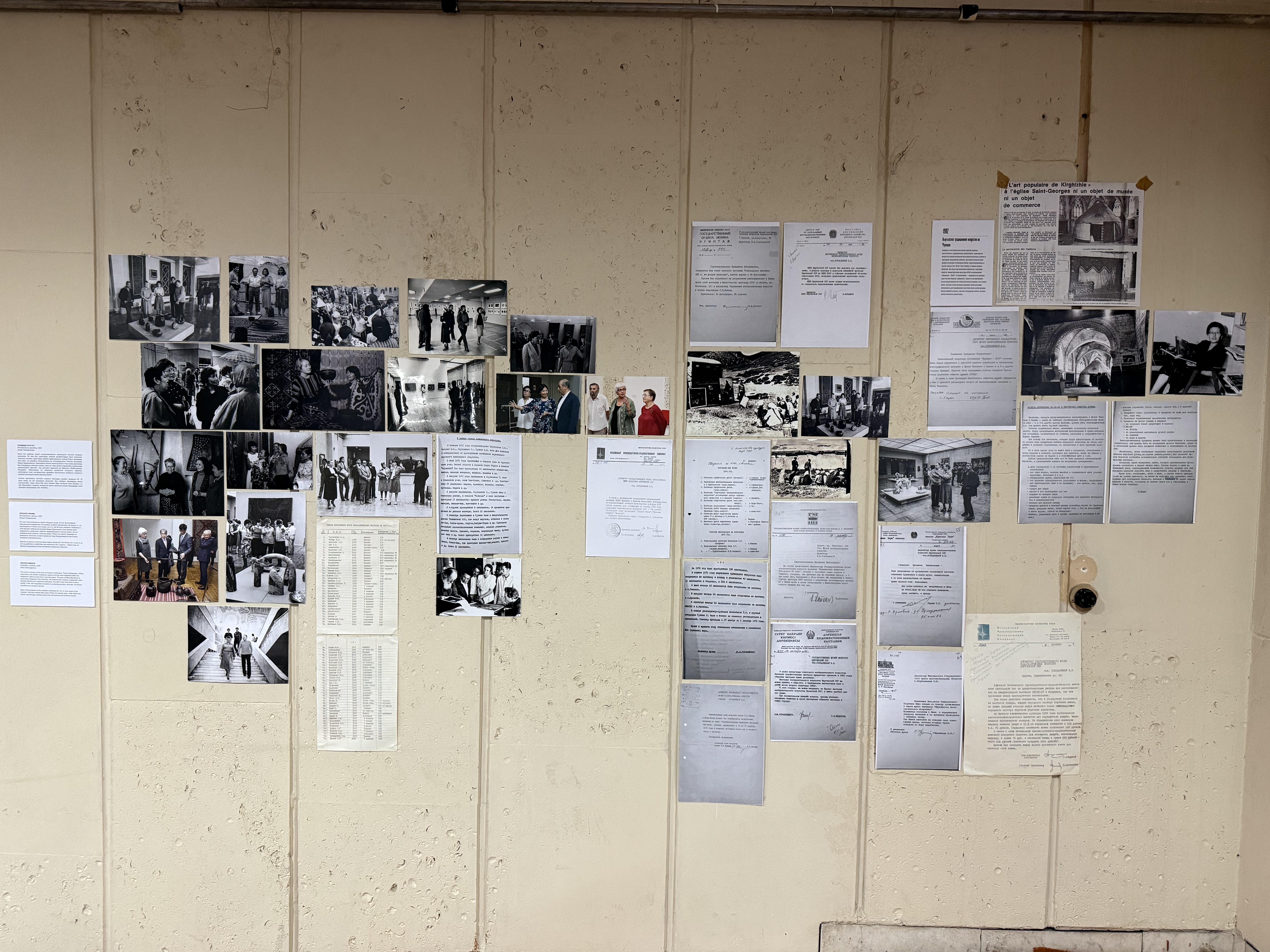
This wall is a mosaic depicting the lives of the museum’s employees. The photographs, official documents and random snapshots capture not only events within the institution, but also how they were discussed.
Maria Barinkova’s story is particularly intriguing in this chronicle. Her personal file contains the following statement: while working full-time as a cloakroom attendant, she didn’t even have time to visit the dentist. She later requested a transfer to a cleaning position, and her traces resurface later still as a museum docent.
Many of the subjects of this exhibition dedicated 20 or 30 years, or even more, to the museum. Some of them worked with us for several years, while others are known only through carefully preserved oral histories and archival records.
“Among these documents are records of social support for museum staff. There were two apartments: one turned into a men’s dormitory, the other for women. Employees who needed housing could rent a room there. They also had priority access to kindergarten spots for their children. During holidays, there were requests for bonuses or scarce goods.
In the 1980s, everything was rationed—food, certain products. But thanks to the influence of directors like Kulchakeya Soboleva, the museum’s leadership could sometimes secure extra supplies. For example, there’s a note here about releasing potatoes at a fixed price, without surcharges.” Alima Tokmergenova

